A Smarter Approach to Double Retro Glazing
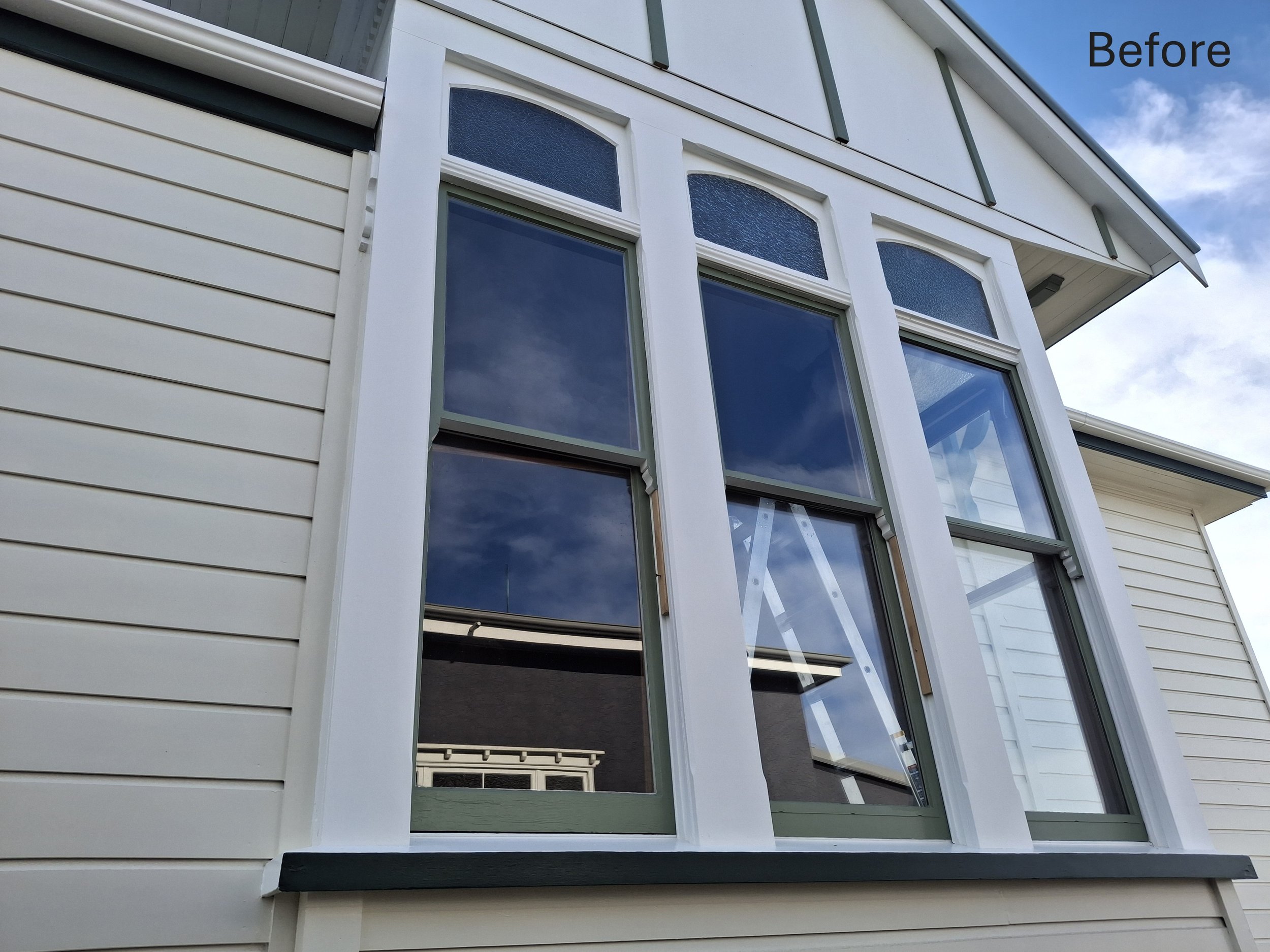
The EVS Double Retro Glazing system has been engineered to deliver outstanding thermal performance, long-term durability, and a premium finish while preserving the character of your existing timber windows.
At the heart of the system is an innovative aerated PVC glazing bead that securely holds the double-glazed unit in place. Its slim, low-profile design creates a clean, refined appearance that blends seamlessly with traditional timber joinery.
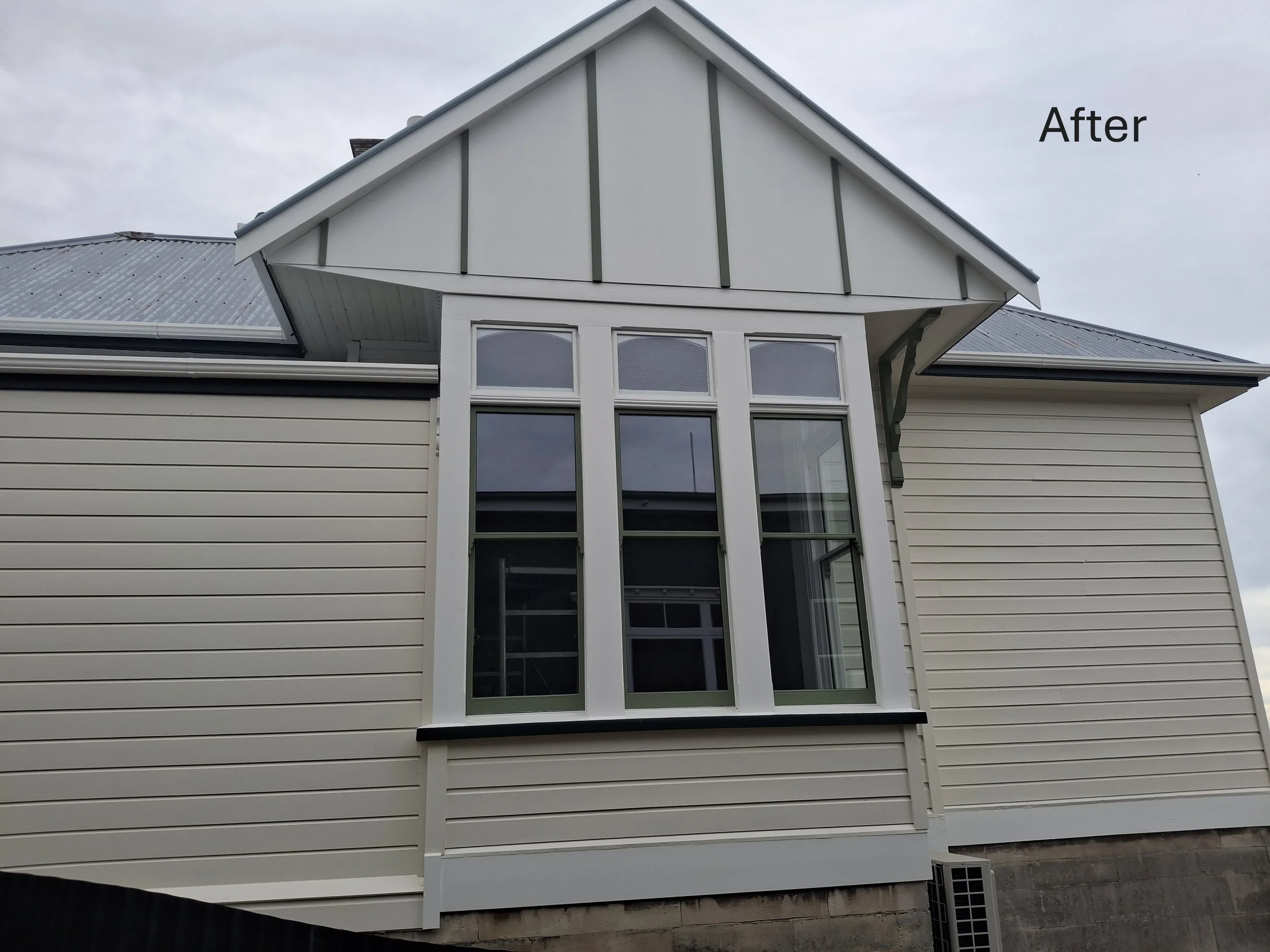
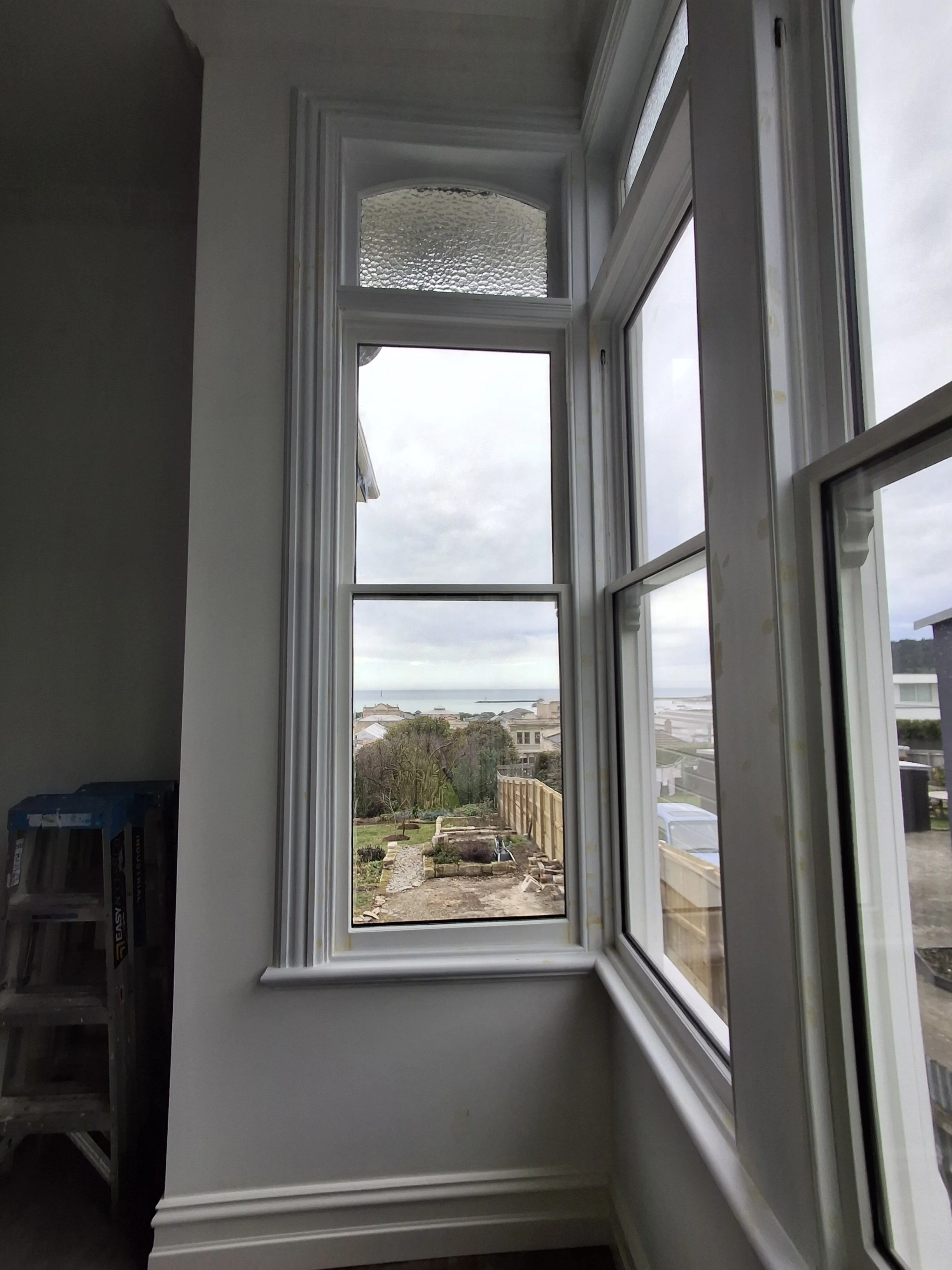
Providing service in Waitaki Valley, Kurow, Duntroon, Oamaru, Kakanui, Hampden and surrounding areas.
Every EVS installation follows industry best practice, with correctly specified glazing units, precision glazing blocks, and accurate edge clearances to ensure optimum performance and reliability.
What makes EVS different is its unique ventilated glazing bead design. Integrated air vents promote continuous airflow around the glazing unit, helping moisture escape naturally from the glazing cavity.
Unlike conventional systems that rely primarily on drainage holes, the EVS system encourages ongoing air circulation to reduce trapped moisture before it can lead to timber rot, condensation issues, or glazing panel failure. This innovative approach helps protect both your windows and your investment for years to come.
Engineered to Last
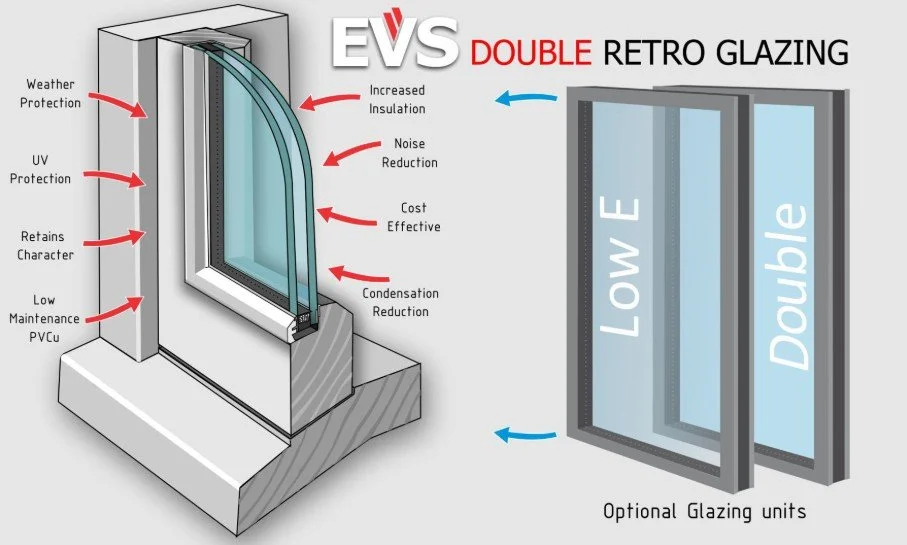
Unlike traditional timber glazing beads, the EVS PVC profile can be cut, pinned, and painted to match your existing joinery, yet it will not absorb moisture, swell, warp, twist, or split over time. The result is a low-maintenance, long-lasting glazing solution that continues to perform year after year.
dies Glass
Thermal Resistance
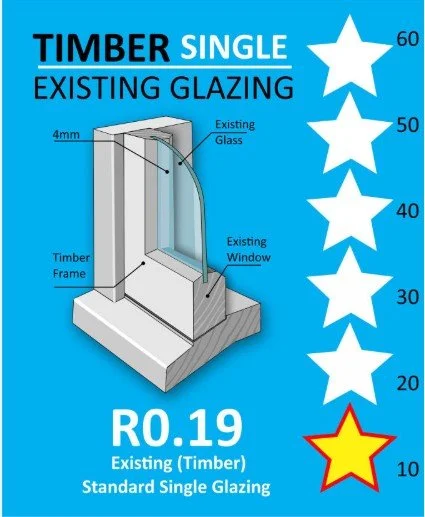
Single-glazed windows have a relatively low insulation value R0.19), which allows heat to escape more easily than insulated glazing. This can result in colder indoor temperatures, higher energy costs, and increased condensation, particularly in poorly ventilated areas. During winter, single glazing can also create cold spots and draughts, reducing the overall comfort of your home or workplace.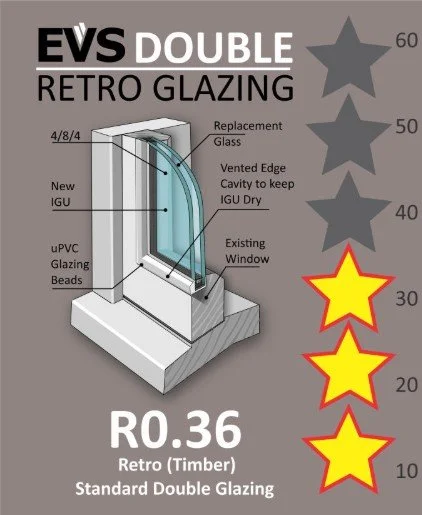
The EVS Double Retro Glazing fitted with standard glazing provides a significant improvement in thermal performance, with an insulation value of R0.36. This is considerably higher than standard aluminium-framed double glazing (approximately R0.26), helping to reduce heat loss, minimise condensation, and improve indoor comfort. It is also ideal for allowing natural sunlight to warm your home, making it an excellent choice for a warmer, more energy-efficient living environment.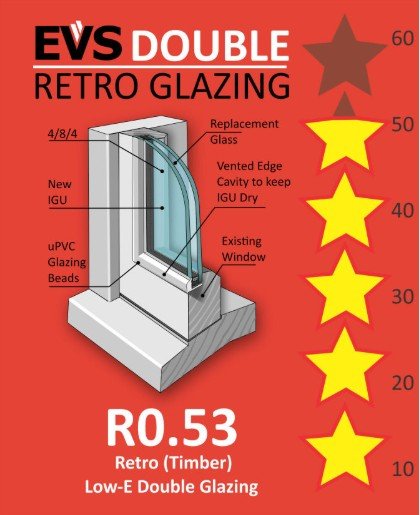
The EVS Double Retro Glazing fitted with Low-E argon panels provides top-performing thermal performance for retrofitted window solutions, with an insulation value of R0.53. The Low-E coating and argon gas work together to reduce heat loss in winter while helping to limit unwanted heat gain in summer. This provides enhanced energy efficiency, improved year-round comfort, and reduced condensation, making it an excellent choice for homeowners looking to maximise the performance of their existing windows.